








Dr. Hugh Cutcher
November 20, 2025
Share this post
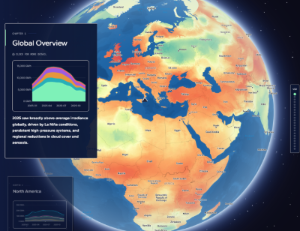
Seasonal forecasts through the end of the Northern Hemisphere spring point to favorable conditions for solar generation across key markets in the United States, China, and Europe, according to analysis using the Solcast API. Despite regional variability, particularly in China, utility-scale solar operators across all three regions can expect generally above-average irradiance during critical months of the coming season. Whilst long-range seasonal forecasts are fickle, forward planning is an important part of grid and power dispatch planning.
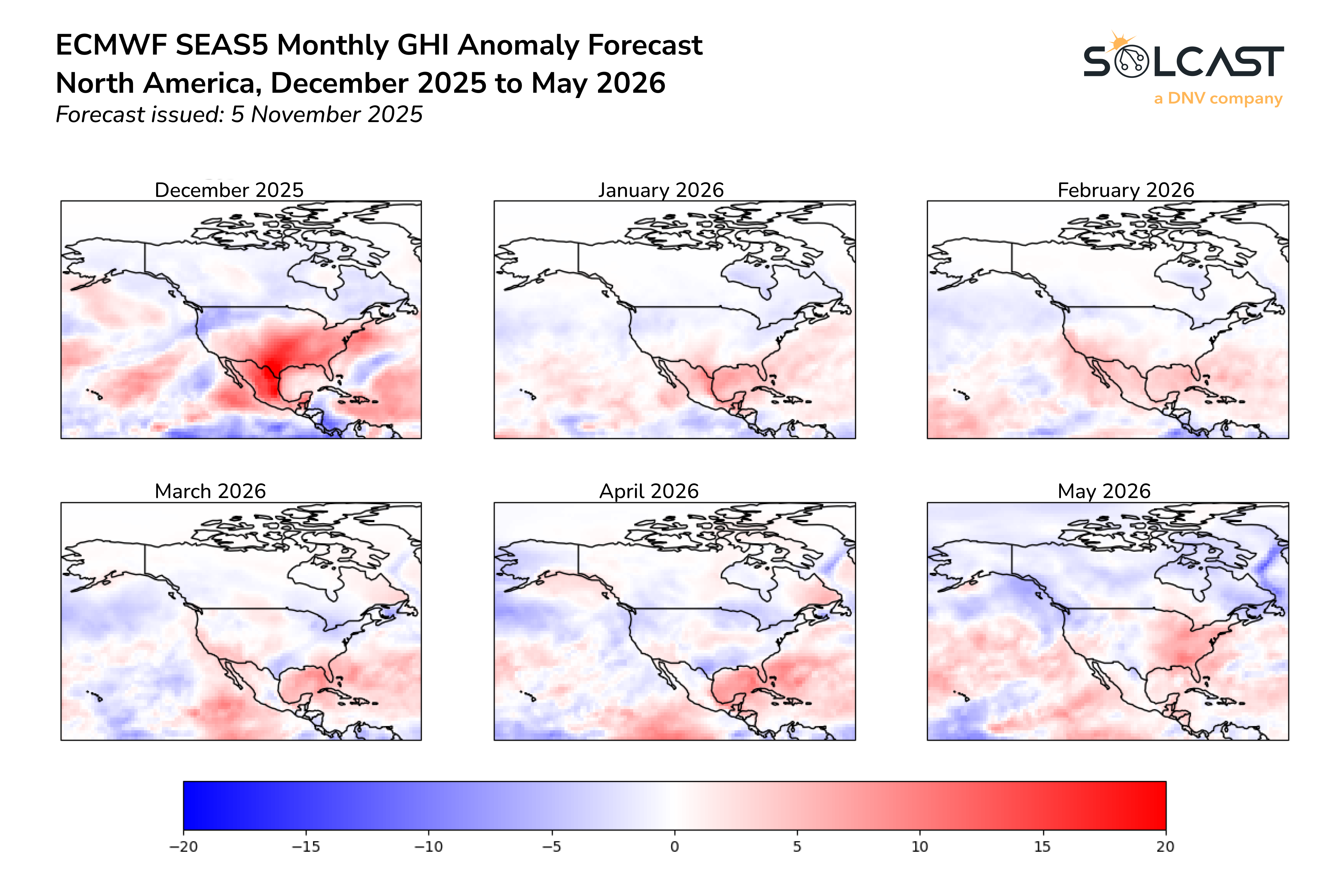
The Southwestern United States is set to benefit from consistently positive irradiance anomalies through to May. Solcast data shows that solar resource levels in this region could exceed climatological averages by up to 20% in December alone. This is set to benefit the concentration of large utility-scale PV assets from Southern California to Texas, which are forecast to experience positive anomalies from December through May. The broader North American outlook includes additional likely positive conditions in Central America, parts of the Caribbean, and the Eastern US, while Canada is expected to see below-normal conditions during December. These patterns suggest a seasonally advantageous period for US solar operators, particularly in the South.
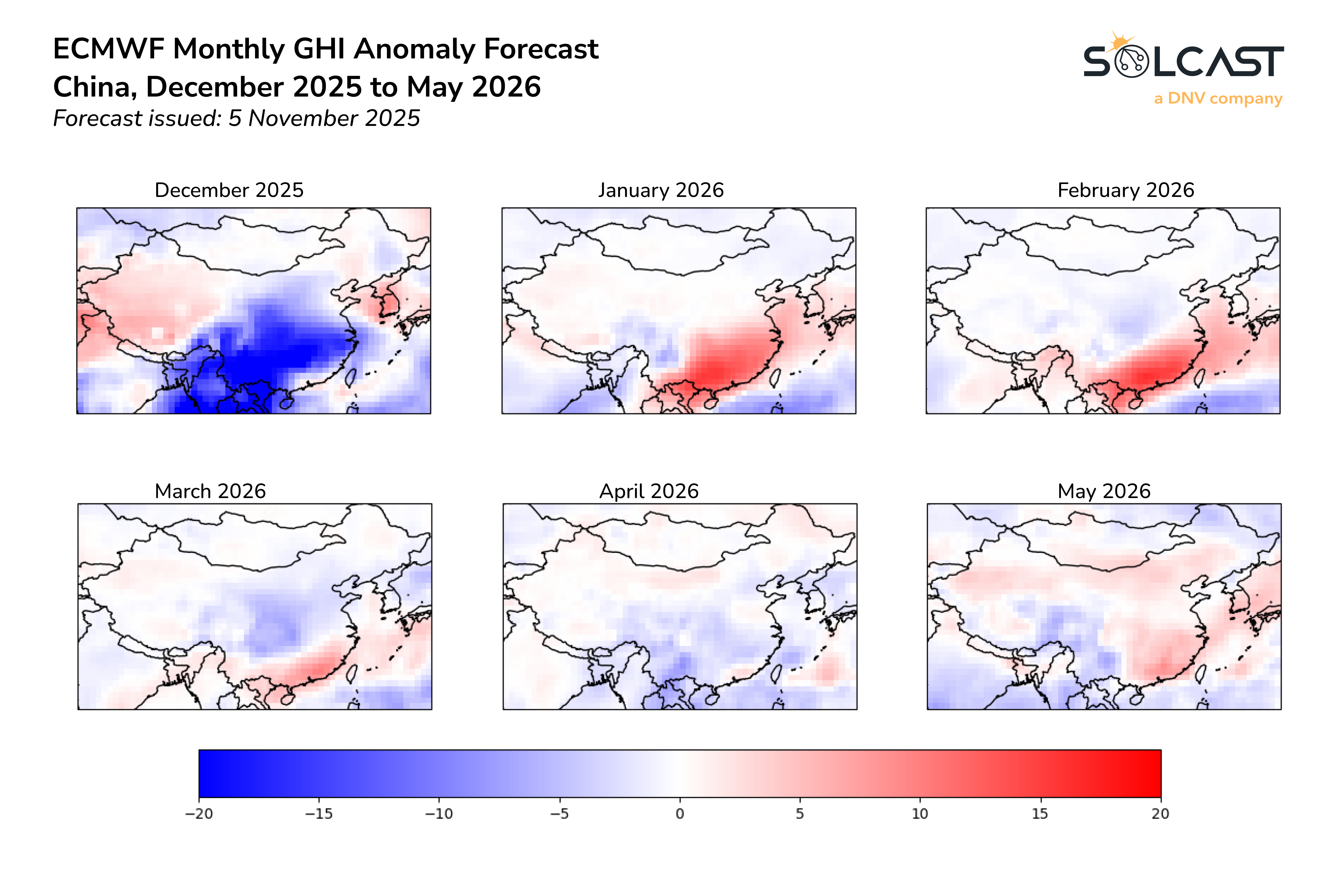
In China, the forecast points to a continuation of the familiar east-west split in solar conditions. The eastern and southern regions are projected to experience irradiance up to 20% below normal in December to end a broadly positive year, before rebounding in January and February. However, most of China's utility-scale solar generation is located in the north, where GHI anomalies are forecast to remain more stable. In these northern regions, January and February may see irradiance slightly below climatology, but conditions are expected to improve with the arrival of spring. Solcast forecasts show a run of positive anomalies from March through May, offering a constructive outlook for asset performance during the early part of the year, especially as conditions move into peak solar generation in late spring and early summer.
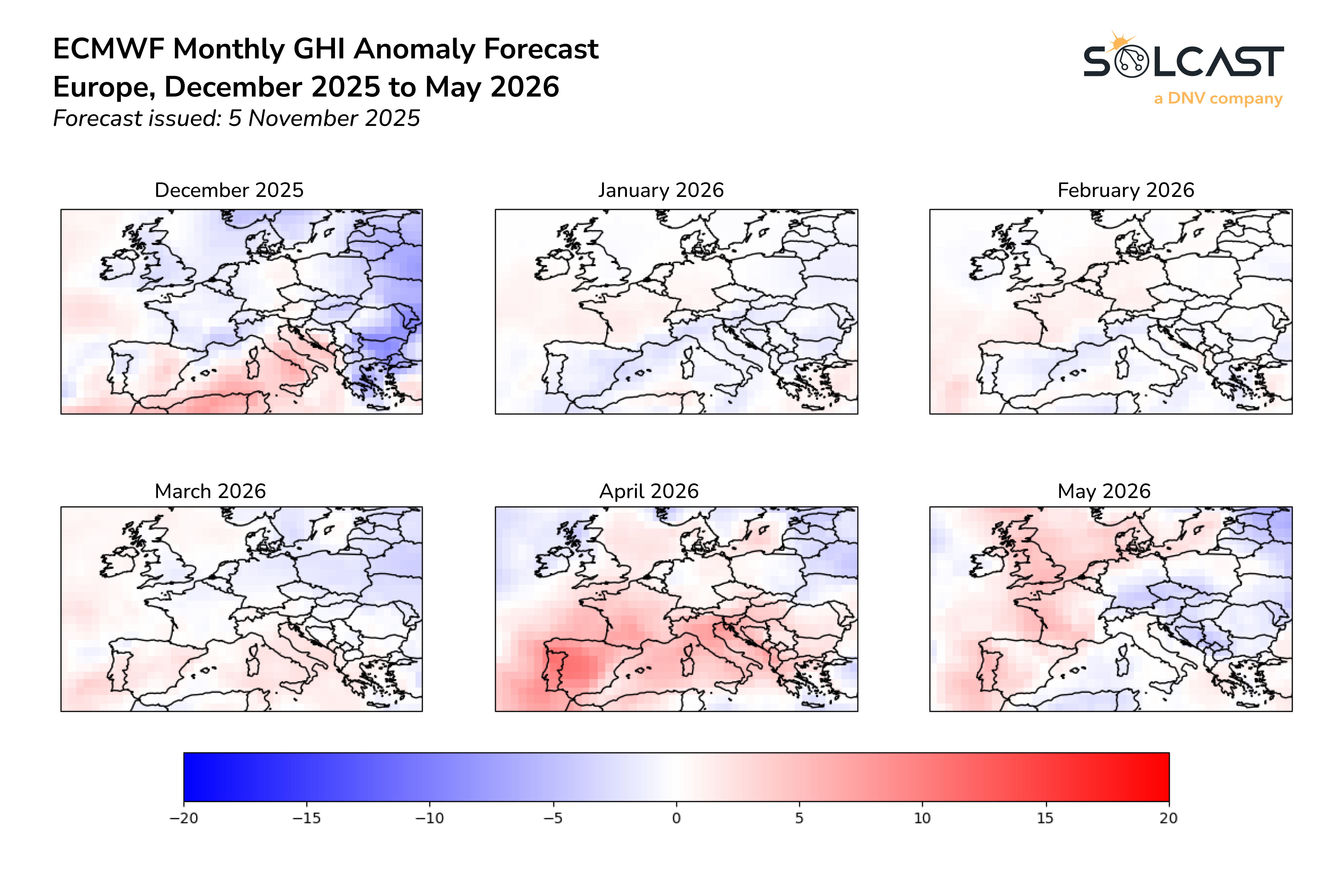
Meanwhile, Europe shows milder seasonal deviations overall, with a more defined positive signal developing in the south. The western Mediterranean basin, in particular, is forecast to benefit from stronger irradiance in spring. A general positive anomaly currently forecast for April suggests a surge in solar production as days get longer and skies remain clearer than normal.
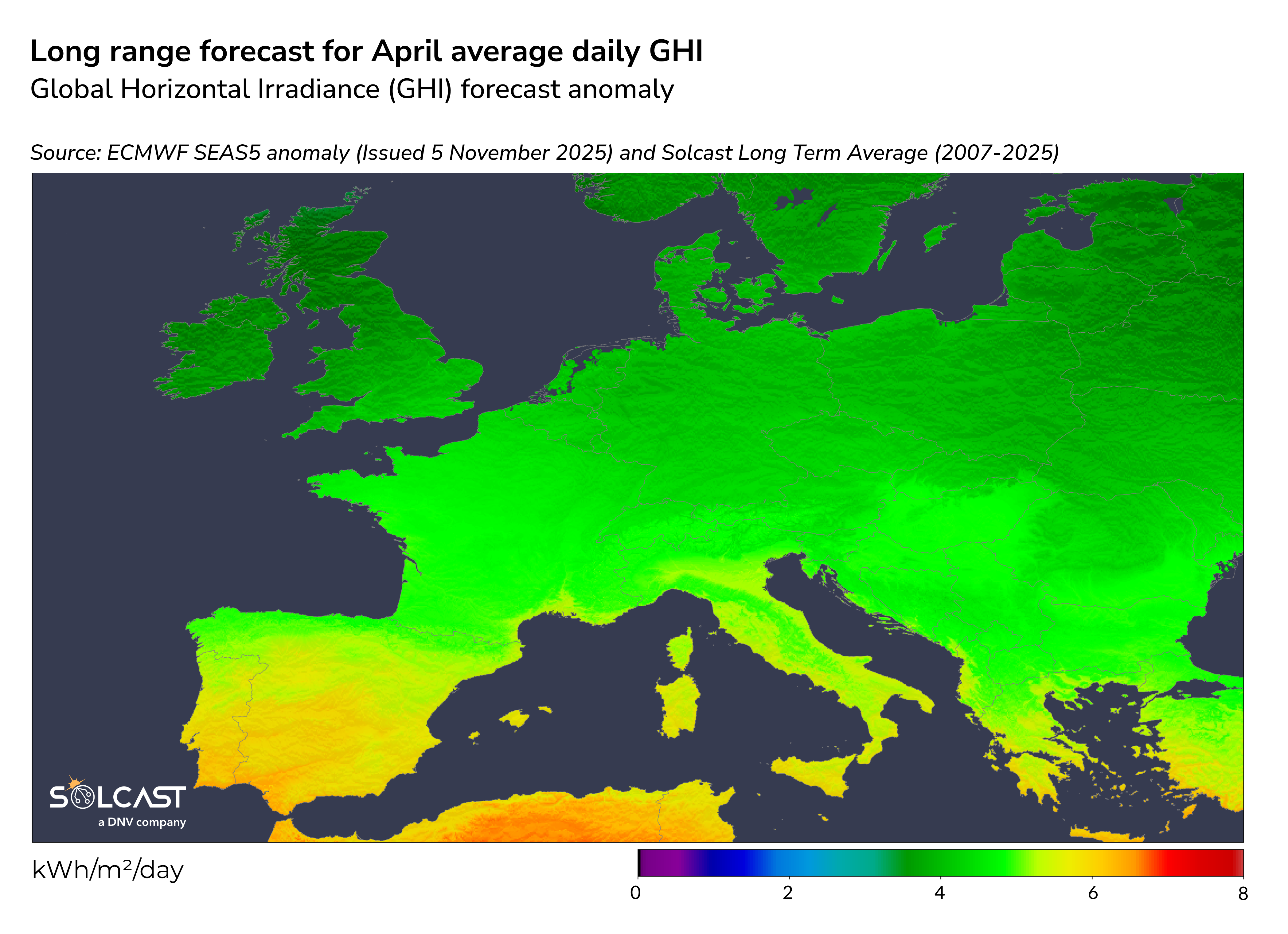
As shown in Solcast API analysis’ April Daily GHI projection, combining ECMWF SEAS5 anomalies with Solcast’s long-term averages highlights strong positive signals across the western and Mediterranean regions. Spain is currently forecast to see anomalies around 15% above normal in April, with the country's major PV sites forecast to exceed average irradiance by more than 5% during the same period.
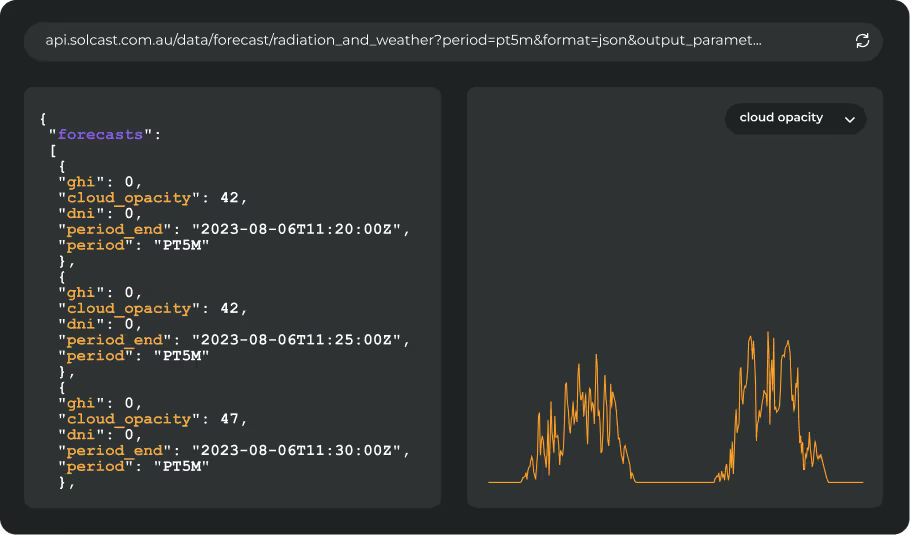
Track weather conditions, cloud movements, and irradiance-influencing factors that might impact your solar generation. Access bankable actuals and accurate forecasts when you sign up for a Solcast API toolkit. You can reach out to our team for an extended trial.