








Dr. Hugh Cutcher
November 24, 2026
Share this post
October 2026 brought unusually sunny conditions across much of southern China and mainland South East Asia, with irradiance 20%+ above average in the strongest-affected areas, according to analysis using the Solcast API. Persistent high pressure over South East Asia and the South China Sea, alongside a very strong El Niño, suppressed rainfall and cloud. Sichuan and Chongqing missed much of the irradiance boost, while repeated cold fronts and Typhoon Champi interrupted the broader pattern farther north and east.
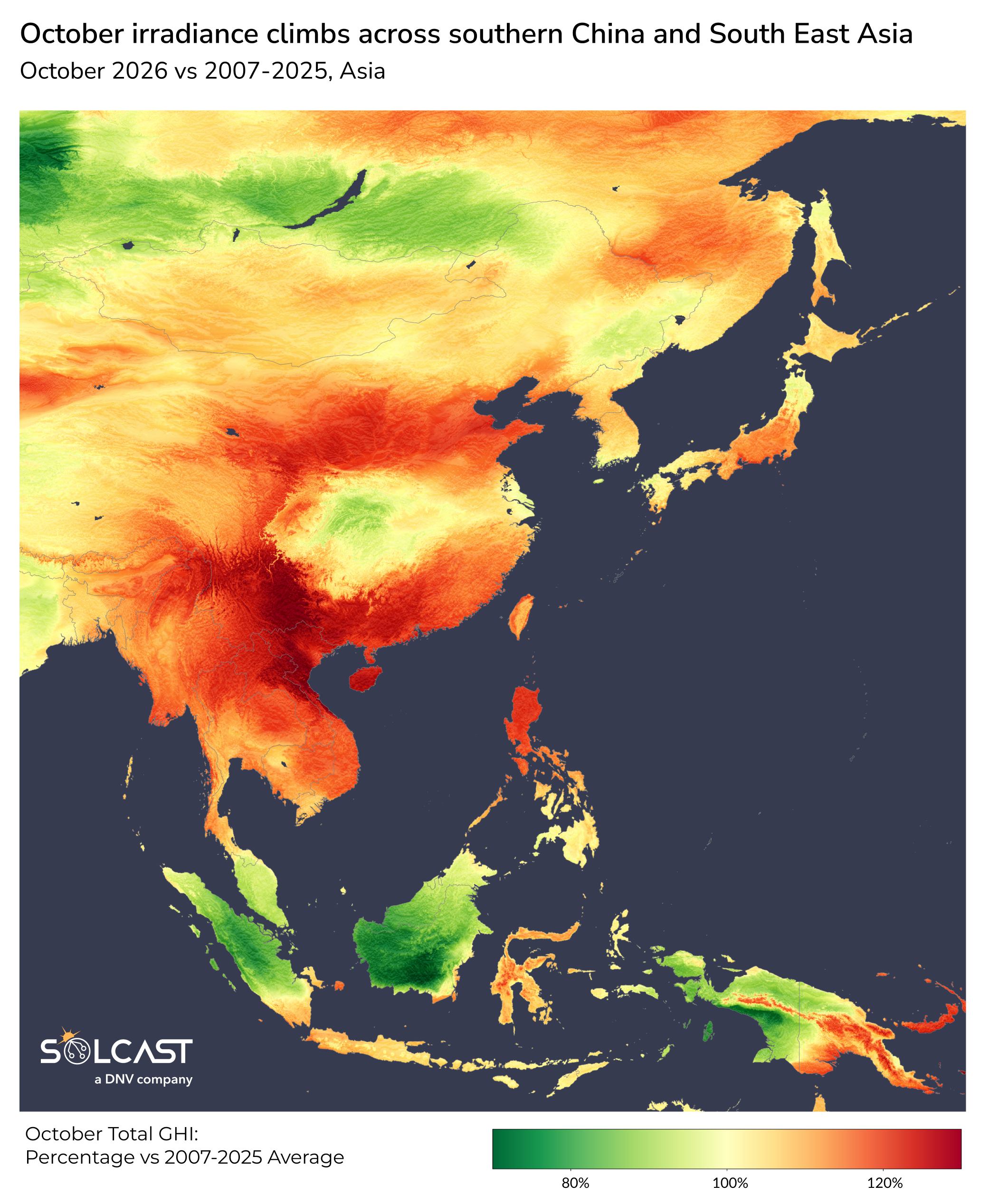
The strongest positive irradiance anomalies stretched across Yunnan, Guangxi, Guangdong and Hainan, through northern Indochina and into the Philippines. Rainfall was up to 6 millimeters per day below average across much of the same region, helping keep skies clearer. October rainfall in the southern southwest was more than 50% below normal, with drought persisting in Yunnan, southwest Guizhou and southern Guangxi. Southern and central China were also more than 1.5 C warmer than average. Hong Kong recorded its warmest October, with a mean temperature of 27.6 C. A weaker northeast monsoon and persistent high pressure helped limit the usual influx of moisture and cloud, reinforcing the sunnier pattern during a very strong El Niño.
Sichuan and Chongqing were a notable exception. While surrounding regions recorded positive irradiance anomalies, the basin saw slightly below-average irradiance for October. More easterly winds than usual and lower pressure over the Sichuan Basin helped keep cloud concentrated over the region, with the surrounding terrain and anomalously high pressure limiting its dispersal. The additional cloud coincided with neutral to slightly above-average rainfall in October, in contrast with the drier conditions surrounding the basin and farther south.
Farther north and east, repeated cold-air outbreaks brought periods of increased cloud and precipitation, interrupting the otherwise favourable irradiance conditions. China experienced six cold-air outbreaks during October, 2.4 more than average. These brought rain and snow across parts of northern and eastern China, with eastern Hebei and most of Beijing receiving 50–100 mm of precipitation from 15–23 October.
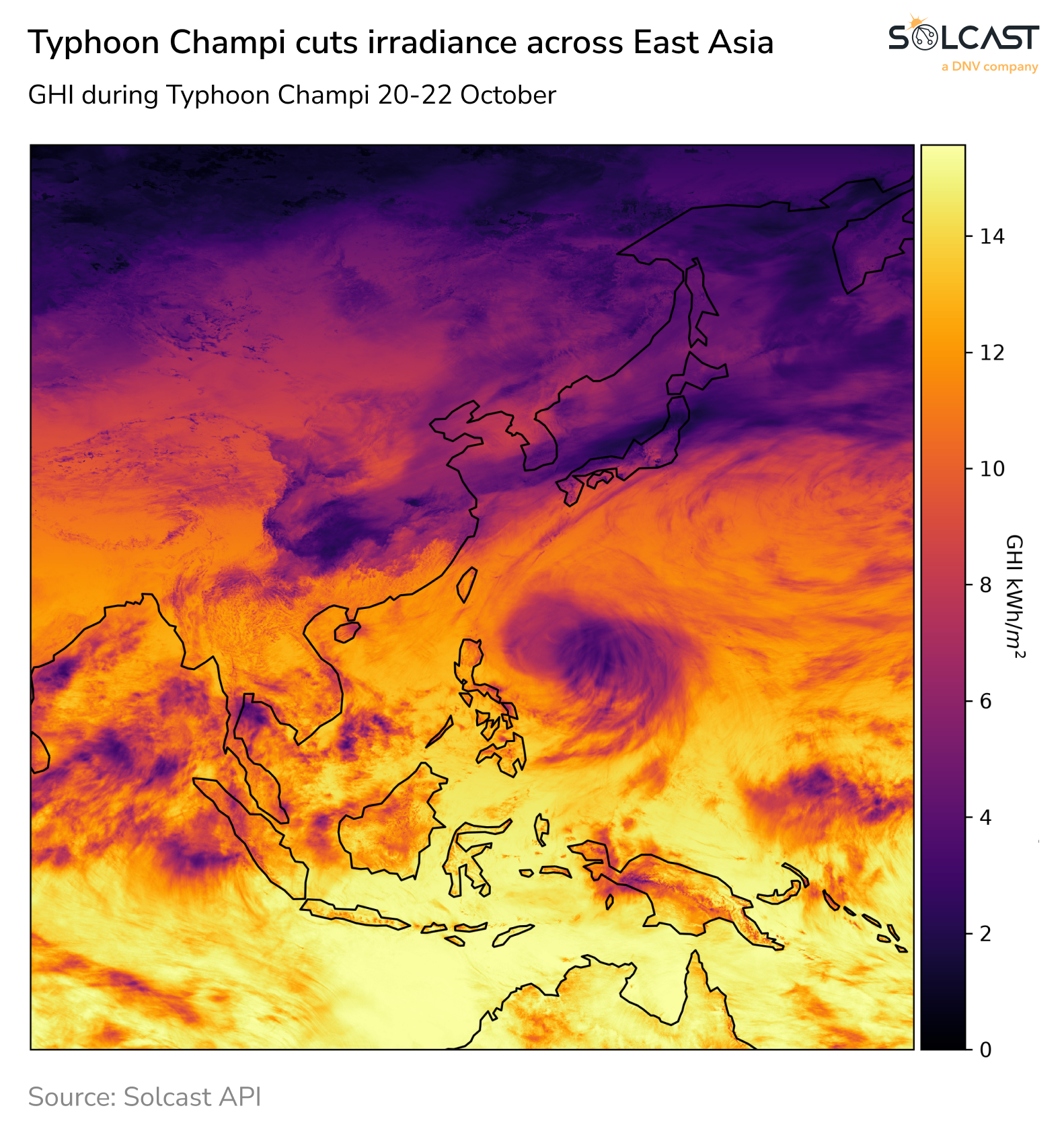
Typhoon Champi provided another interruption to the broader pattern. The storm formed on 11 October and reached winds near 215 km/h, affecting Taiwan, Japan and China. Cloud and rainfall associated with the system reduced irradiance as it moved through the region, with 62,400 people evacuated in Shanghai due to the conditions. October was particularly active for tropical weather overall, with eight tropical cyclones across the South China Sea and western North Pacific during the month.
Farther south, Sumatra and Kalimantan recorded below-average irradiance despite substantial rainfall deficits. Indonesia had recorded more than 1.06 million fire hotspots by 14 October, with widespread smoke and haze reducing incoming sunlight despite the otherwise dry conditions. Aerosol optical depth shows where the heaviest concentrations of smoke and haze occurred during the month.

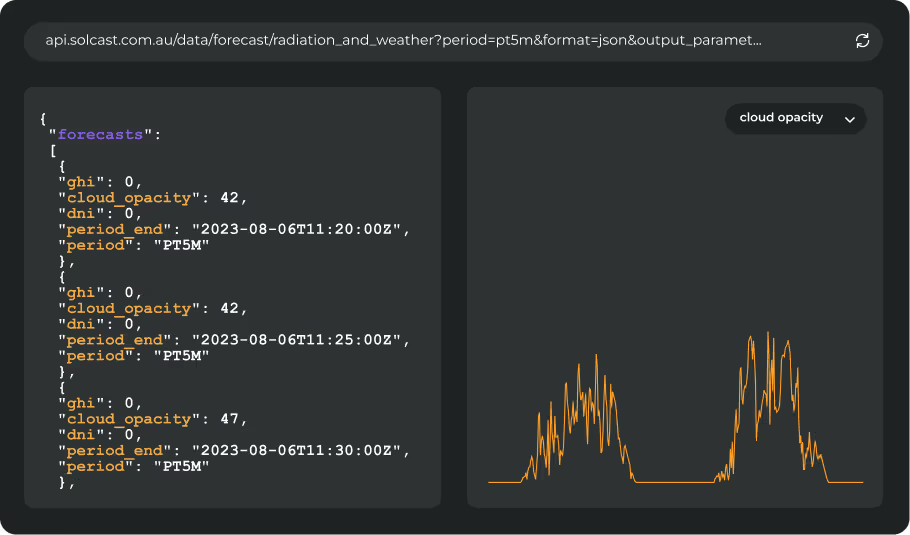
Track weather conditions, cloud movements, and irradiance-influencing factors that might impact your solar generation. Access bankable actuals and accurate forecasts when you sign up for a Solcast API toolkit. You can reach out to our team for an extended trial.