








Dr. Hugh Cutcher
November 5, 2026
Share this post
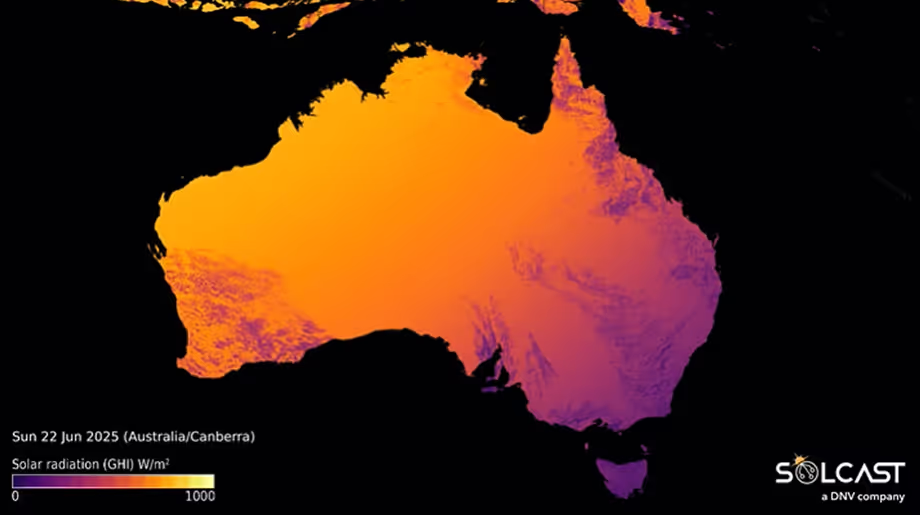
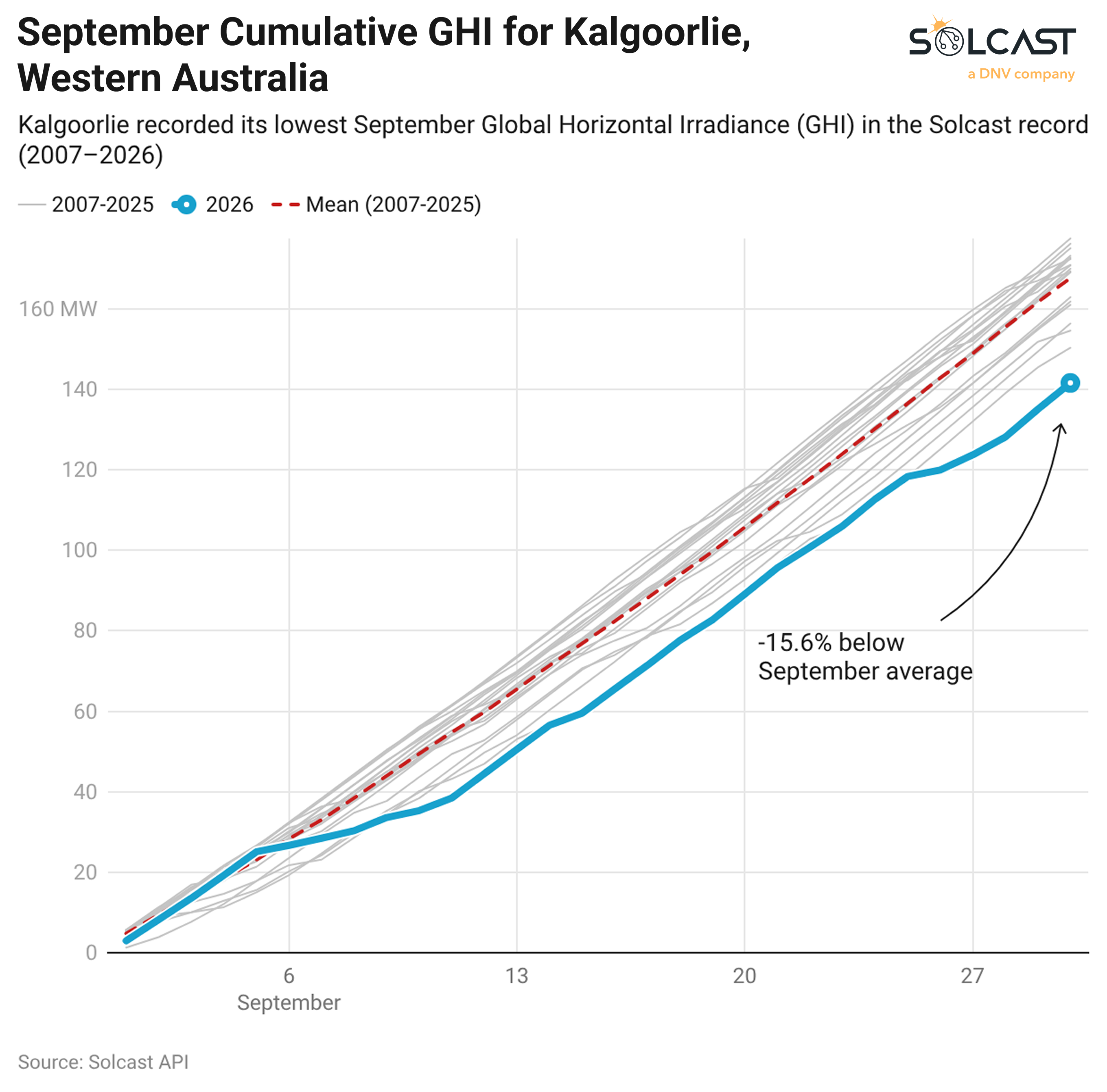
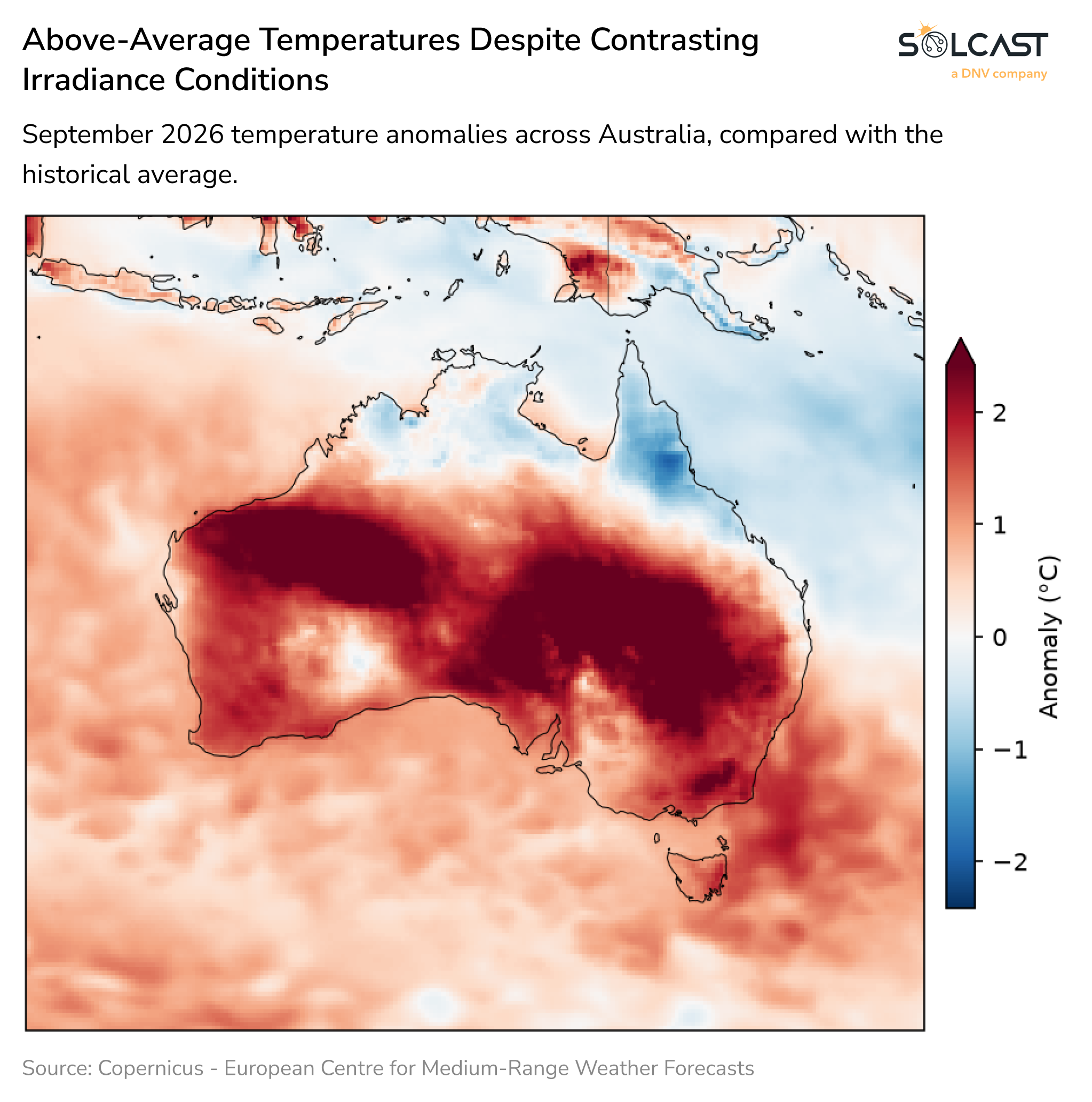
Australia's first month of spring brought a strong east-west divide in solar irradiance and precipitation, while temperatures were above average across most of the country, according to analysis using the Solcast API. Eastern Australia experienced generally above-average irradiance and unusually dry conditions, with the strongest irradiance increases occurring inland rather than along the coast. In contrast, remote mining solar projects in Western Australia's Pilbara and Goldfields-Esperance regions experienced widespread irradiance deficits, as slow-moving weather systems brought increased cloud cover and rainfall.
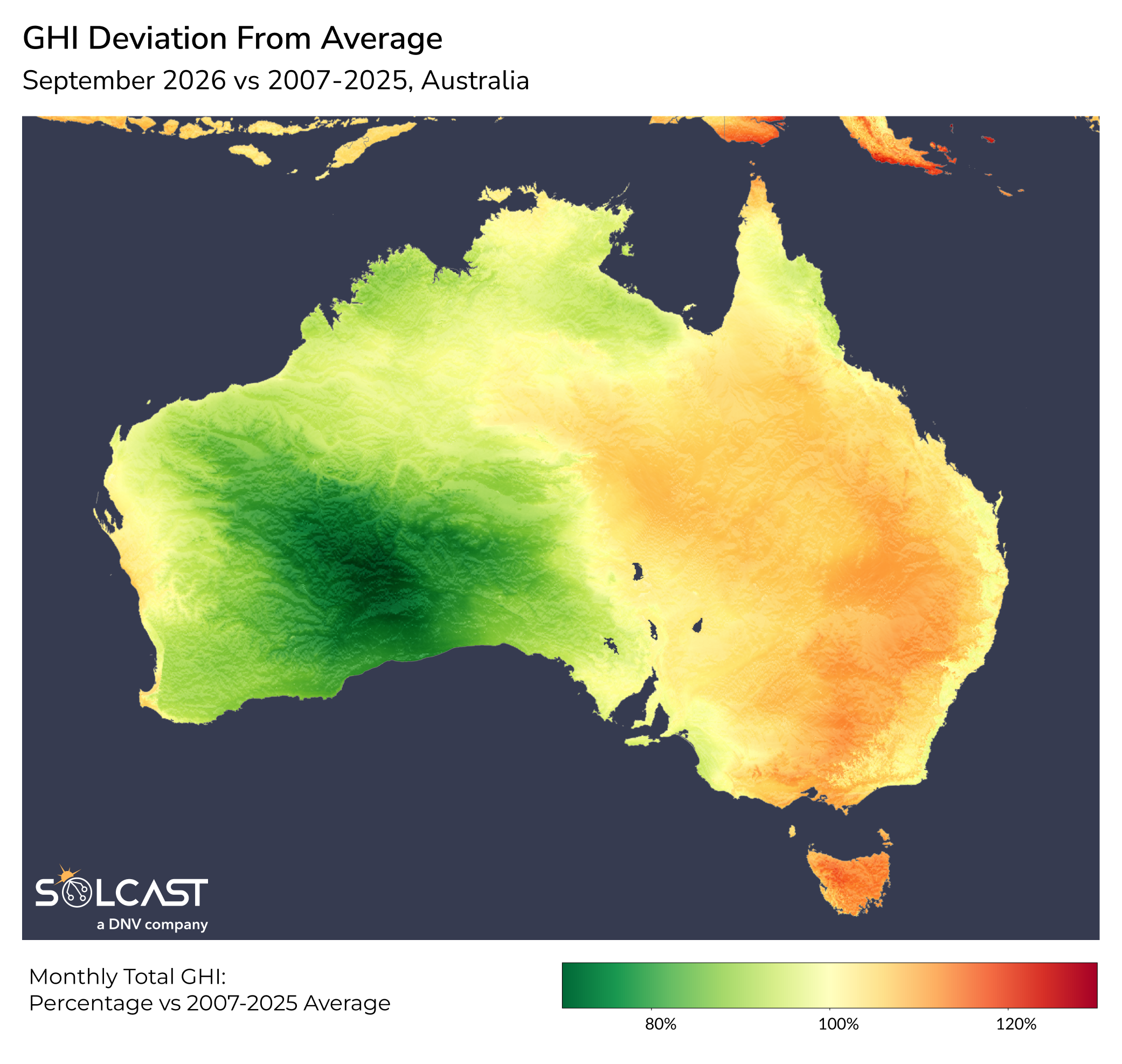
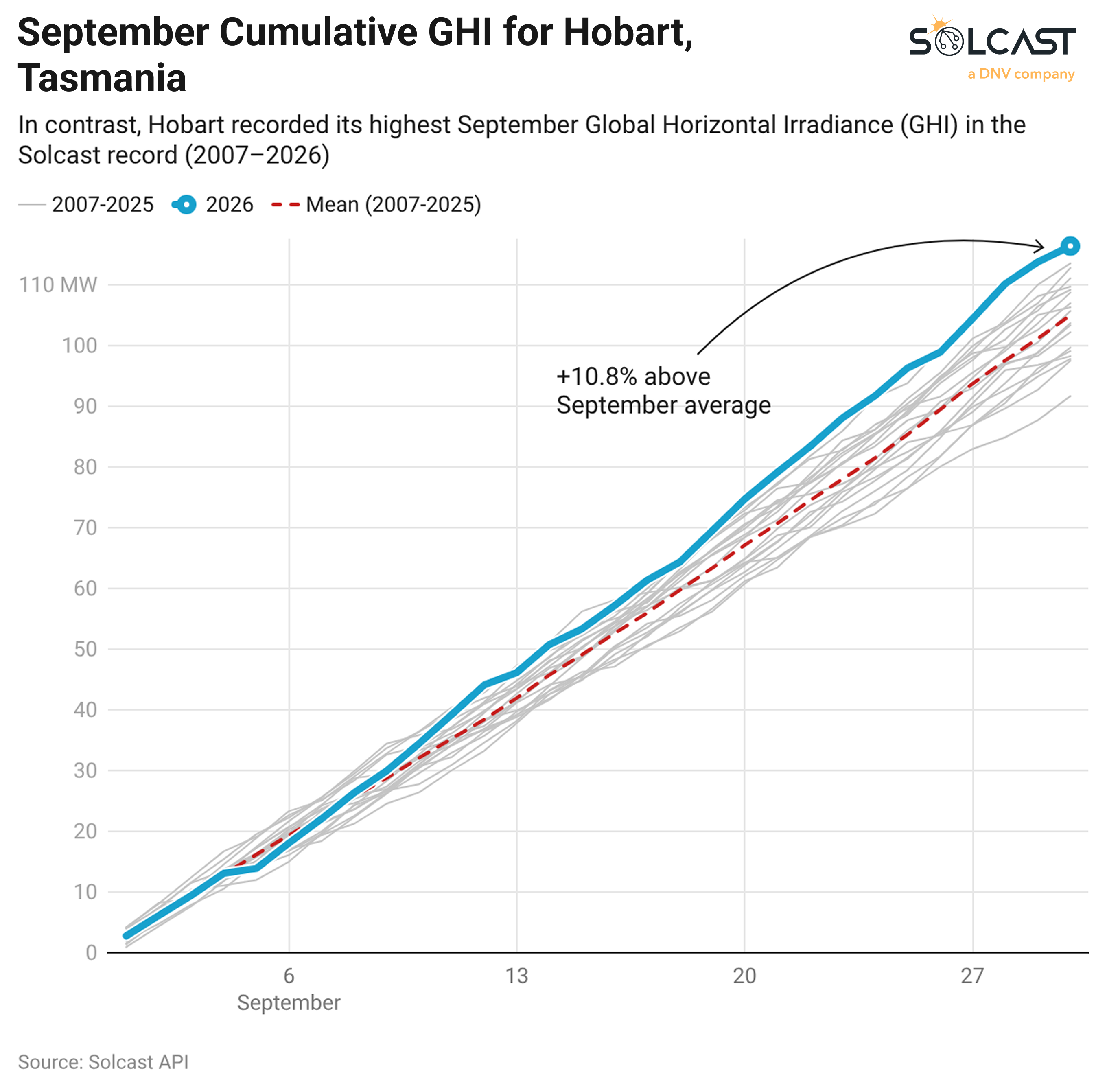
Across eastern Australia, September irradiance averaged 5% above normal. Coastal locations, including most distributed PV markets, generally remained within a few percent of average, while areas further inland hosting utility-scale PV recorded increases of around 10%. Parts of Tasmania experienced near-record or record September irradiance for the Solcast data period, averaging 10% above normal. These conditions coincided with exceptionally dry weather across the southeast, with rainfall deficits exceeding 30 mm across much of New South Wales, Victoria and Tasmania. Most locations in these states experienced record or near-record September dryness, continuing the below-average rainfall conditions observed through winter.
Western Australia experienced contrasting conditions, with September irradiance averaging 11% below normal. The Pilbara recorded irradiance around 10% below average, while the Goldfields-Esperance region experienced larger deficits of 15–20%. Further inland, parts of the Gibson Desert recorded irradiance as much as 29% below average.
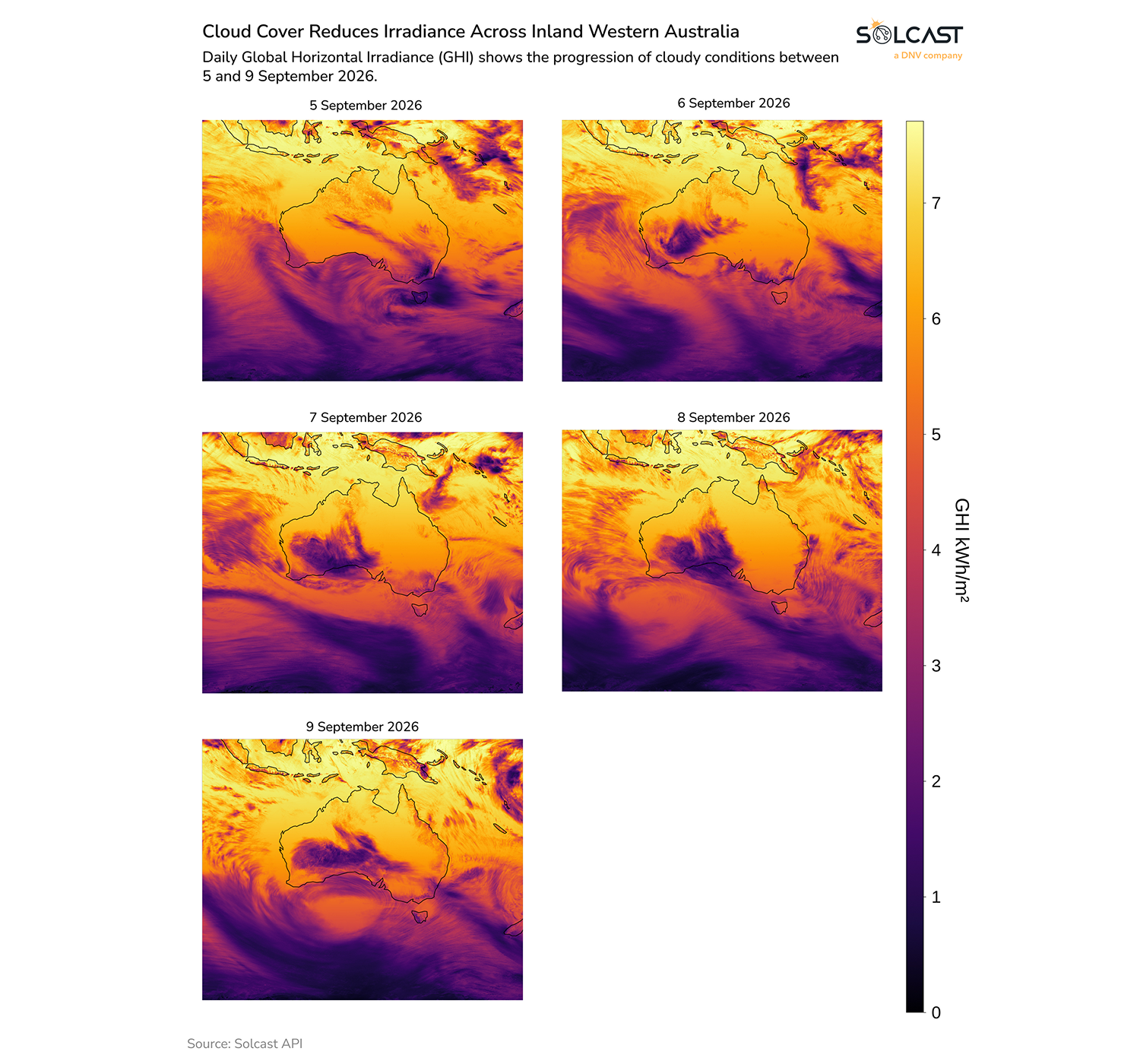
Several slow-moving low-pressure systems brought persistent cloud cover to inland Western Australia, contributing to the region's below-average irradiance. The most significant rainfall occurred between September 5 and 9, when large parts of Goldfields-Esperance received more than 50 mm of rain, compared with a typical September total of just 10 mm.
Despite the reduced irradiance and increased rainfall, temperatures across much of Western Australia remained above average, with parts of the Pilbara exceeding 3°C above normal. Eastern Australia experienced a different combination of conditions, with above-average irradiance, unusually dry weather and temperatures generally 1–3°C above average across the southeast.
Track weather conditions, cloud movements, and irradiance-influencing factors that might impact your solar generation. Access bankable actuals and accurate forecasts when you sign up for a Solcast API toolkit. You can reach out to our team for an extended trial.

